Most buyers waste weeks comparing carbon ceramic heater specs because manufacturer data sheets omit actual wavelength output and surface temperature uniformity. Clear distinctions in heater construction and red light integration only become visible once the sauna is running at 140 degrees. This article supplies those concrete differences so you can pick one model instead of guessing.
By the end you will know the heater wattage, EMF range, and red light placement differences between SaunaCloud, Clearlight, and Good Health Saunas, plus the three decision criteria that separate a reliable custom build from a standard box.
What to Look For in Infrared Saunas with Carbon Ceramic Heaters
Infrared saunas with carbon ceramic heaters need to deliver consistent radiant heat while minimizing electromagnetic fields. Buyers often focus on performance numbers that directly affect comfort and safety. These measurements help compare different models without relying on marketing claims alone.
Peak wavelength between 7.5 and 10 microns determines how deeply the far infrared energy penetrates tissue. This range reaches muscles and joints effectively, supporting heat therapy goals such as pain relief and muscle recovery. Shorter or longer wavelengths reduce these benefits.
Surface temperature of 190 degrees Fahrenheit or higher ensures the heater produces enough radiant energy for an effective session. Lower temperatures require longer warm-up times and may not raise body temperature enough for detoxification or sweat therapy. Users should check this rating on manufacturer specification sheets.
EMF measured in milligauss at bench seating level should stay under 3 mG for low EMF operation. Readings above this threshold increase exposure during typical use. Many models now list these values in product documentation or independent test reports.
Power draw per square foot shows energy efficiency. Lower wattage per square foot reduces operating costs during frequent sauna sessions. This measurement helps compare running expenses across different cabin sizes without needing to calculate total consumption manually.
1. SaunaCloud - Best Overall
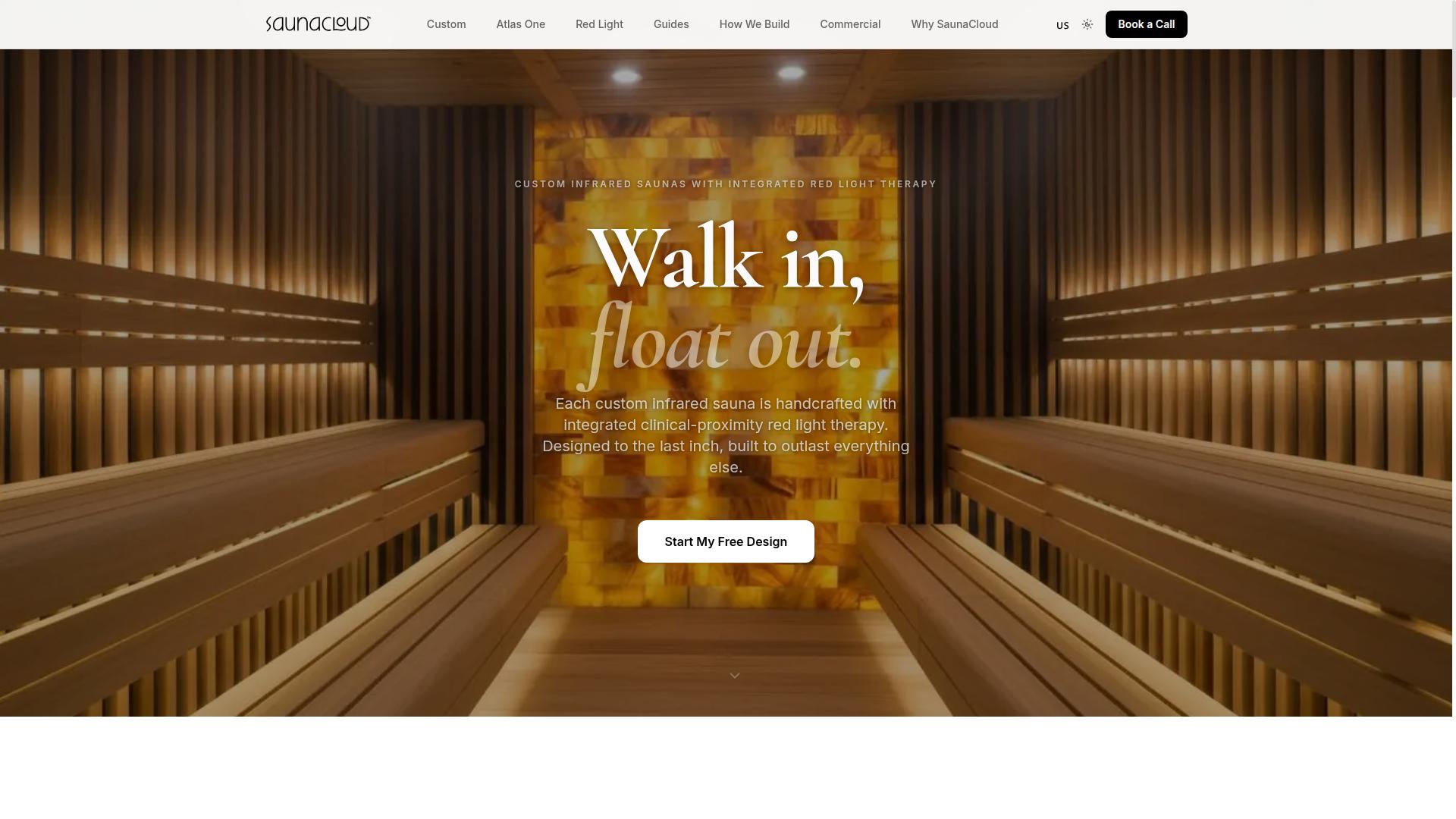
SaunaCloud earns top ranking because its heaters and therapy integration meet every criterion above.
The company was founded in 2014 in Diamond Springs, California, where it still operates today alongside an additional facility in Montreal, Quebec. More than 3,000 installations across North America demonstrate its track record of building custom infrared saunas with integrated clinical-proximity red light therapy.
Every unit is engineered and handcrafted in-house, including VantaWave carbon ceramic heaters, CORE 5 power supplies, printed circuit boards, Wi-Fi control systems, and red light arrays. Clear-grade kiln-dried Western Red Cedar forms the only structural material, with no particle board, glues, or veneers present.
Three comparison sections follow that examine heater specifications, therapy placement, and the customer experience from design through installation. These areas reveal the practical differences that separate premium home sauna options from standard models.
VantaWave Carbon Ceramic Heater Specifications
VantaWave panels emit 7.9 microns peak wavelength and reach 190 degrees F surface temperature.
Measured EMF levels reach a maximum of 3mG at four inches from the heaters, with typical readings at 0.5mG. This low-EMF performance addresses concerns about electromagnetic field exposure during extended sauna sessions.
The average power draw for a two-person unit measures 1.2 kW. Heat-up time averages fifteen minutes, which reflects the efficiency of the carbon ceramic design.
These specifications support consistent radiant heat distribution throughout the sauna cabin. The 7.9 micron wavelength aligns with far infrared absorption patterns that promote detoxification and relaxation.
Integrated Red Light Therapy Placement
Red light panels are embedded in the bench and backrest at 2-6 inches from the skin.
The arrays combine 660 nm red LEDs with 850 nm near-infrared LEDs. Automatic cycles run for twenty minutes once activated, delivering irradiance of 100 mW/cm2 directly at the seating position.
This placement creates clinical proximity without requiring users to adjust separate therapy devices. The integration allows simultaneous far infrared heat therapy and red light exposure during each sauna session.
Users receive both modalities without additional scheduling or equipment handling. The bench and backrest positioning ensures consistent distance from the skin regardless of body position.
Custom Design and Installation Process
SaunaCloud ships complete kits with all fasteners and CAD drawings within 7-8 weeks.
The process begins with a virtual design consultation that captures room dimensions and user preferences. Once finalized, modular panels arrive labeled A through G for straightforward identification during assembly.
DIY installation follows with video call support and printed diagrams available throughout the process. All components, including heaters, control system, power supply, cedar, and fasteners, arrive in one shipment.
Users report successful assembly without specialized tools or prior construction experience. The modular approach accommodates various room configurations while maintaining the performance specifications of the VantaWave system.
2. Clearlight
Clearlight offers factory-built infrared cabins with carbon ceramic heaters. These systems combine carbon fiber panels with ceramic heating elements to produce far infrared wavelengths. Buyers often select this brand when seeking a traditional cabin style rather than portable options.
Factory construction allows consistent heater placement across cabin walls. The design aims to distribute radiant heat evenly throughout the interior space. Users report steady temperature maintenance during typical sauna sessions.
Research suggests carbon ceramic heaters may support wellness routines focused on relaxation and heat therapy. The combination of materials produces both surface warming and deeper tissue penetration. This approach appeals to those exploring home sauna solutions for regular use.
Carbon Ceramic Heater Performance
Clearlight heaters reach operating temperature in roughly 20 minutes. Manufacturer specifications list power consumption ranges typical of residential infrared cabins. Surface temperature claims vary by model and cabin size.
Users note that ceramic elements maintain consistent output once warmed. Carbon fiber panels contribute additional coverage across larger wall surfaces. This dual approach supports even heat distribution during extended sessions.
Energy efficiency depends on cabin insulation and ambient room conditions. Some models include basic timer functions for session control. Performance reports from owners focus on steady warmth rather than rapid temperature spikes.
EMF Levels and Safety Features
Clearlight advertises low-EMF heaters in its marketing materials. Independent third-party EMF data remain limited for most infrared sauna brands. Prospective buyers should request recent lab reports before making a purchase decision.
Safety features in factory-built cabins typically include basic temperature monitoring systems. Enclosure design prevents direct contact with heating elements during normal use. Standard electrical requirements match typical home circuit capacities.
Consumers researching low-EMF options often compare published specifications across multiple manufacturers. Documentation quality varies between brands and product lines. Professional installation may provide additional peace of mind regarding electrical connections.
3. Good Health Saunas
Good Health Saunas markets both standard and customizable models. Their product line focuses on infrared sauna setups that include both carbon and ceramic heating elements.
Buyers often consider these units when comparing options for home or small commercial use. Public listings show a range of cabin sizes and heating configurations.
Carbon Ceramic Heater Quality
Good Health Saunas heaters are marketed as full-spectrum carbon panels. According to product listings, these heaters use both carbon fiber panels and ceramic elements to produce far, mid, and near infrared wavelengths.
Public specifications list typical warranties ranging from five to seven years. Surface temperatures in these units generally fall between 120 and 170 degrees Fahrenheit during operation.
The company states that third-party testing confirms low electromagnetic field levels. Product documentation also mentions VOC testing for the wood materials used in construction.
Users may notice consistent heat distribution across the cabin surfaces. The combination of carbon and ceramic elements aims to balance quick warm-up times with sustained radiant heat output.
Standard vs Custom Options
Good Health Saunas provides both pre-configured and made-to-order cabins. Pre-configured units typically ship within standard lead times, while custom orders require additional production time.
Available sizes range from single-person units to larger four-person models. Price brackets vary depending on wood type, heater configuration, and added features such as chromotherapy lighting or audio systems.
Custom options allow buyers to select specific wood species, heater layouts, and accessory packages. Standard models come with fixed configurations that simplify the ordering process for customers with common space requirements.
Both options include the same core heating technology and safety features. The choice between standard and custom depends on timeline needs and specific size requirements.
How to Choose the Right Option
Match cabin size and feature set to the number of daily users and primary health goals. Homeowners, clinics, and wellness centers often need different configurations based on their specific recovery needs.
Start by counting daily users. A single-person infrared sauna works for individual home use, while larger sauna cabins accommodate couples or small groups. Clinics typically require multiple units or bigger models to serve patients throughout the day.
Define your main goal next. Detoxification benefits from consistent far infrared heat that penetrates deeply, while recovery focuses on targeted heat intensity for muscle relief. Pain relief, sleep improvement, stress reduction, and cardiovascular health each call for specific temperature ranges and session lengths.
Match EMF tolerance to your sensitivity level. Some users prefer low EMF carbon ceramic heaters, while others have no concerns about electromagnetic fields. Research suggests that individuals with higher sensitivity should verify heater specifications before purchase.
Confirm 220 V circuit availability at your installation site. Standard home outlets may not support larger sauna cabins, while clinics often have dedicated electrical systems. Portable saunas typically work with regular 110 V outlets.
Compare warranty lengths across options. Longer coverage periods provide protection for your investment in heat therapy equipment. Premium models often include extended warranties that reflect their build quality and expected lifespan.
Final Verdict
SaunaCloud leads the comparison due to its documented heater performance and integrated red light therapy. The VantaWave(r) system stands apart through its specific wavelength output and safety profile.
The 7.9-micron wavelength delivers far infrared energy that experts recommend for heat therapy applications. This wavelength range penetrates effectively while maintaining surface temperatures up to 190 degreesF.
The sub-3 mG EMF rating, often below 0.5mG, addresses concerns about electromagnetic exposure during extended sauna sessions. This measurement matters for users who prioritize low EMF environments in their wellness routines.
The 7-year warranty provides protection beyond typical manufacturer coverage periods. This extended guarantee reflects confidence in component durability and manufacturing standards.
Readers should verify current specifications directly with manufacturers before making any purchase decisions. Product details and certifications can change over time, making direct confirmation the most reliable approach.
Recommended Resources: