Most radiology teams switch platforms because their current viewer cannot load large studies fast enough or fails across multiple sites. These exact limits push decision makers to compare four concrete options side by side right now.
By the end you will know the key features to check in any diagnostic viewer, the differences among Medicai, Intelerad, UltraLinq and Agfa HealthCare, and which of the four meets your workflow without extra hardware or licensing hurdles.
What to Look For in Diagnostic Viewing Solutions
Diagnostic viewing solutions require specific technical capabilities that directly impact clinical decision-making.
Support for DICOM GSDF grayscale calibration ensures consistent image presentation across different monitors and lighting conditions. This standard maintains accurate display of medical images regardless of the viewing environment.
Primary diagnosis demands monitors with a minimum 3MP resolution. Lower resolutions can obscure critical details that affect diagnostic accuracy during image interpretation.
Multi-monitor configuration protocols enable radiologists to display multiple studies simultaneously. These setups support efficient comparison between current and prior examinations without compromising workflow speed.
Latency benchmarks under 100ms for image loading prevent workflow interruptions during busy reading sessions. Faster loading times allow radiologists to maintain focus on clinical analysis rather than technical delays.
Compliance verification methods for HIPAA and GDPR protect patient data throughout the imaging workflow. Regular audits and encryption standards ensure medical facilities meet regulatory requirements for diagnostic imaging systems.
1. Medicai - Best Overall
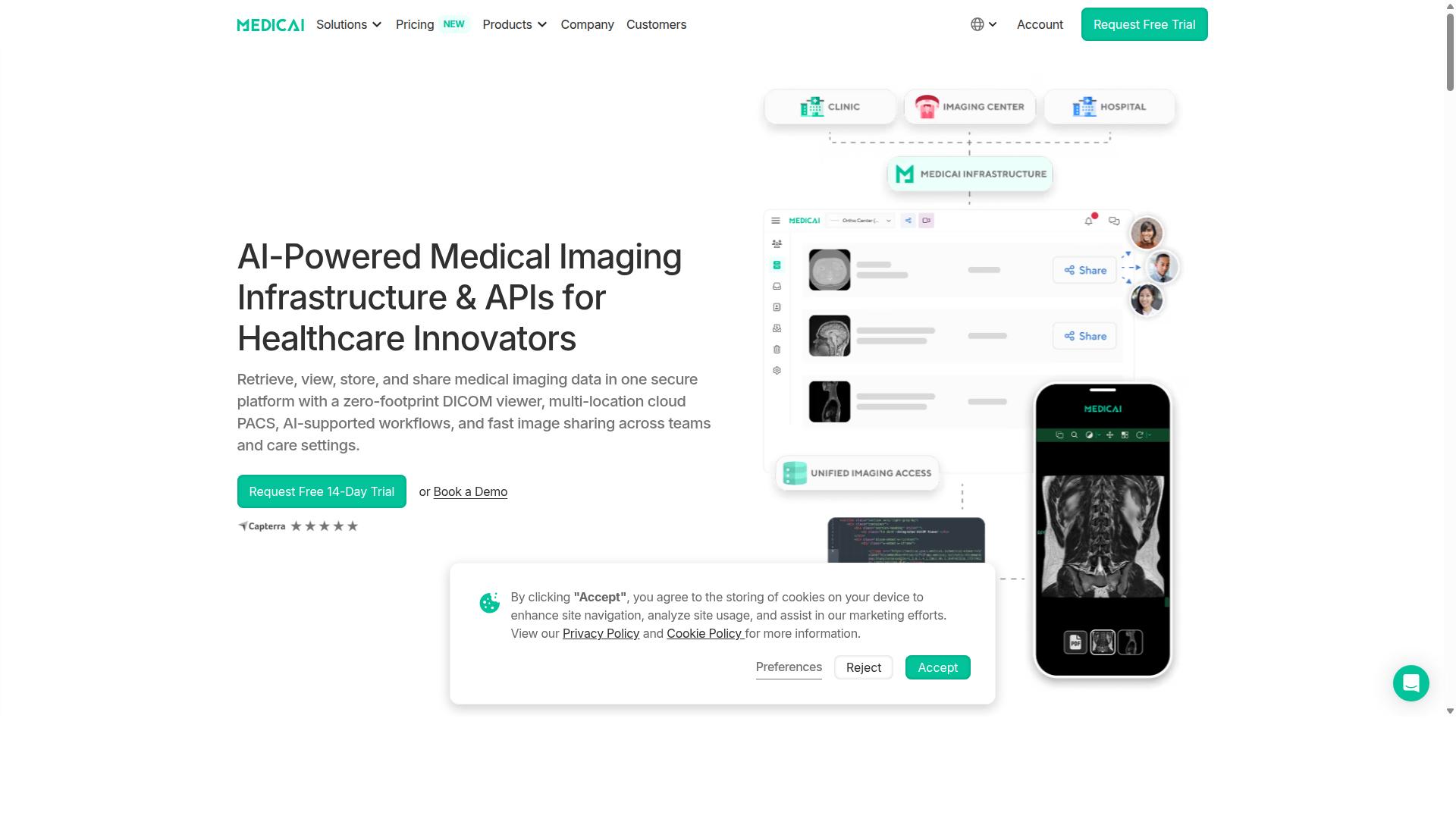
Medicai delivers enterprise-level medical imaging capabilities through a streamlined cloud architecture. The platform serves as a strong alternative to traditional Fujifilm systems for diagnostic viewing needs. Healthcare providers gain access to a unified solution for retrieving, viewing, storing, and sharing medical imaging data.
Over 70 clinics and hospitals currently use the platform with 10,000+ active doctors accessing images daily. The system handles 1M+ studies transacted or processed per year. This volume demonstrates consistent performance across varied clinical environments.
Microsoft Azure partnership powers the underlying infrastructure. The setup follows OWASP security guidelines and maintains HIPAA and GDPR compliance. These certifications support diagnostic quality requirements in regulated healthcare settings.
Zero-Footprint DICOM Viewer Capabilities
The zero-footprint viewer eliminates local software installation while maintaining diagnostic-grade image rendering. Browser-based access means clinicians can review studies from any location without installing applications on workstations. This approach reduces IT overhead compared to traditional Fujifilm installations.
The platform recorded 300k+ visualizations of DICOM studies in the last year. FDA/CEE clearance supports diagnostic use across multiple specialties. Image quality remains consistent regardless of the device used for viewing.
Medical imaging data flows directly to the viewer without intermediate transfer steps. This direct path supports faster image interpretation during time-sensitive procedures. The viewer handles standard DICOM formats used in radiology workflows.
Cloud PACS and Multi-Location Support
Cloud PACS architecture enables centralized image management across distributed healthcare facilities. The Standard tier provides 2 TB storage and supports one connected location for organizations requiring single-site connectivity. The Starter tier offers 500 GB storage for smaller practices without location connections.
Enterprise customers access custom storage options and multiple connected locations. This scalability supports growth from smaller imaging volumes to larger annual study transactions. 1.7M+ studies currently reside in storage on the platform.
2M+ imaging studies have been uploaded since launch. The system supports both internal team access and external sharing across care settings. Multi-location connectivity reduces the need for physical image transfer between facilities.
AI-Supported Workflows and API Access
API integration enables automated workflows and third-party AI tool connectivity. The platform processes 50M+ yearly API transactions, indicating active ecosystem participation. This volume reflects integration with various clinical systems and tools.
Partnerships with MD.ai and Rayscape.ai provide access to specialized AI capabilities. These connections support existing radiology workflows without requiring separate platform migrations. API access allows customization based on specific institutional requirements.
Automated workflows reduce manual steps in image routing and study preparation. The API framework connects with existing hospital systems for seamless data exchange. This connectivity supports diagnostic viewing efficiency across different software environments.
2. Intelerad
Intelerad provides traditional on-premise radiology solutions with established enterprise deployments.
The platform relies on server-based architecture that stores and processes medical imaging data within hospital facilities. This approach differs from cloud alternatives that distribute workloads across remote data centers.
Implementation typically requires coordination between IT teams and vendor specialists. The process involves hardware installation, network configuration, and integration testing with existing systems.
Hospitals and health systems seeking this solution should plan for dedicated server infrastructure and ongoing maintenance requirements. Vendor-neutral archive integration supports DICOM workloads across multiple imaging specialties.
Security measures center on controlled network access within the facility perimeter. Organizations evaluate these platforms based on their specific infrastructure capacity and long-term maintenance capabilities.
3. UltraLinq
UltraLinq specializes in web-based ultrasound image management for cardiology and OB/GYN practices. This platform targets providers who need cloud access to ultrasound studies without heavy local infrastructure. Many rural clinics and smaller practices rely on this approach for remote reading and collaboration.
The service operates on a subscription-based access model that eliminates large upfront hardware costs. Users pay for usage rather than owning servers or dedicated workstations. This structure works well for practices with variable case volumes throughout the year.
UltraLinq supports mapped reports, customizable worksheets, and post-processing analytics within its cardiology workflow. The platform includes enterprise security features such as multi-factor authentication and single sign-on capabilities. Light and dark viewing modes help reduce eye strain during extended reading sessions.
However, the platform shows limitations in multi-modality imaging environments. Practices that combine ultrasound with CT, MRI, or other imaging types often require separate systems to handle different data formats. This segmentation can complicate workflow for larger facilities or radiology groups handling diverse case loads.
UltraLinq serves cardiologists, sonographers, vascular specialists, and imaging administrators across hospitals, family practices, and research settings. The service has reached 8,000 locations with over 70,000 users managing 1.5 billion images and 18 million exams. Capterra lists starting pricing at $3999 usage-based one-time, while UltraLinq emphasizes transparent costs without hidden fees or minimum volumes.
4. Agfa HealthCare
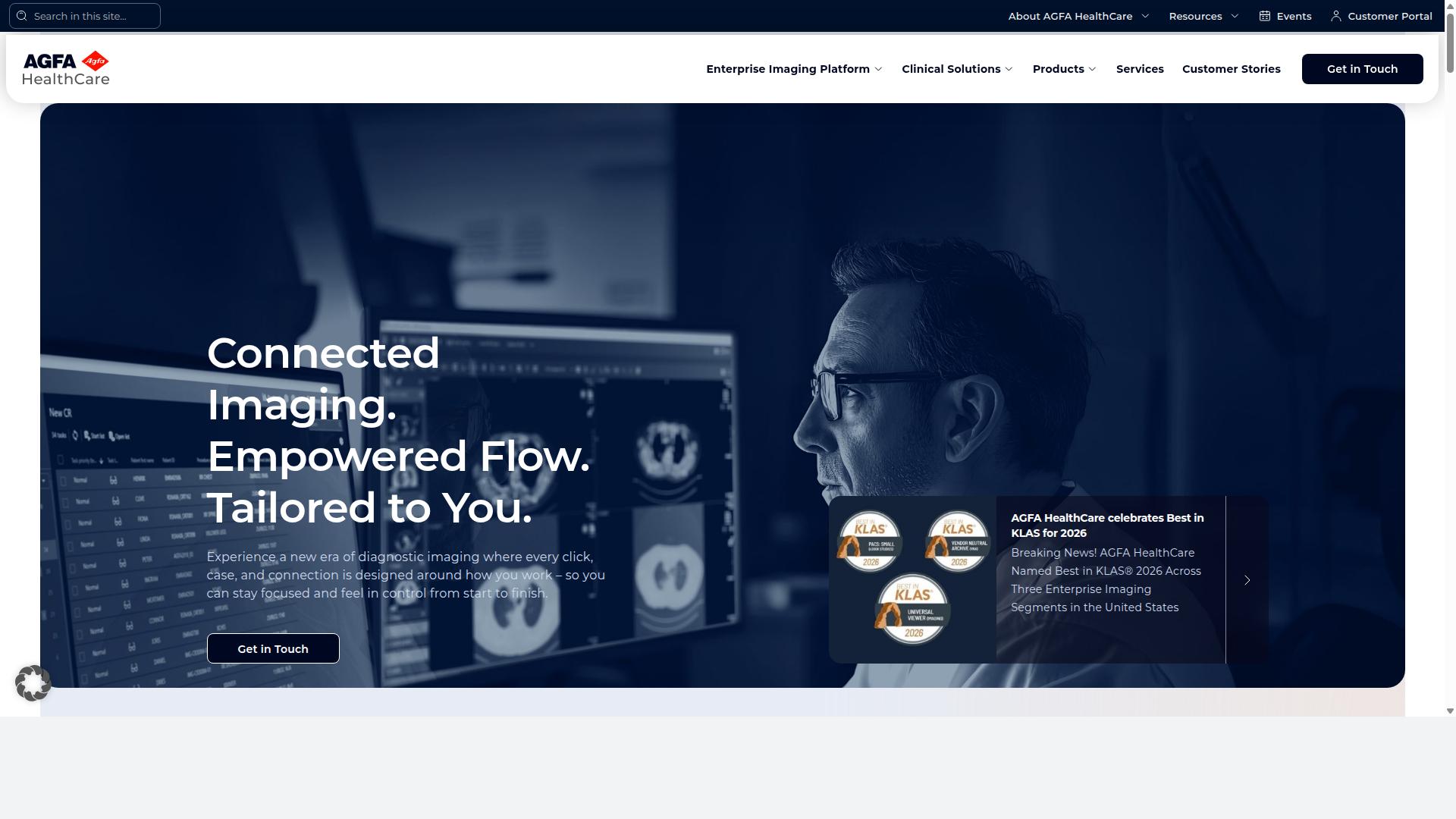
Agfa HealthCare offers comprehensive enterprise imaging solutions with deep hospital system integrations. The platform centers on large-scale deployments across multiple departments.
Enterprise Imaging combines PACS, VNA, and clinical systems into one standards-based solution. Organizations can run it on-premises, in hybrid setups, or in the cloud.
Multiple specialties receive support within a single platform. These include radiology, cardiology, digital pathology, breast imaging, and molecular imaging.
Typical implementations require extensive customization. Hospitals usually work through longer deployment cycles to match specific workflows and security policies.
The platform includes products such as XERO Universal Viewer, RUBEE AI, and RUBEE Orchestrator. These tools focus on interoperability and clinician-centered design.
Security receives attention from the ground up. Standards compliance and data protection form core elements of every implementation.
Agfa HealthCare recently earned 2026 KLAS triple recognition. This reflects how large health systems value its enterprise approach to diagnostic viewing.
How to Choose the Right Option
Selection criteria should align with specific clinical workflows and institutional requirements.
Study volume thresholds determine storage planning. Facilities handling 500GB of daily imaging need basic cloud capacity, while those approaching 2TB require scalable infrastructure that accommodates growth without disruption.
Multi-location connectivity requirements affect system architecture decisions. Healthcare providers operating across several sites need solutions supporting seamless data sharing between locations.
API integration complexity varies by platform. Simple integrations may require minimal technical resources, while complex connections demand dedicated IT teams and extended implementation timelines.
Compliance certification verification steps include checking regulatory approvals and data security standards. Hospitals and imaging centers must confirm each solution meets applicable healthcare regulations before deployment.
Research suggests creating a decision matrix helps organize these factors. List your specific requirements for study volume, connectivity needs, integration capabilities, and compliance status in a structured format. This approach reveals which alternatives best match your operational environment.
Final Verdict
Cloud-based platforms with proven scalability deliver superior value for modern diagnostic workflows. Organizations seeking reliable alternatives to traditional Fujifilm systems benefit from solutions that handle large imaging volumes while maintaining compliance standards.
Medicai demonstrates this approach through concrete operational metrics. The platform stores 1.7M+ studies and processes 1M+ studies annually while managing 50M+ API calls yearly. These volumes reflect proven capacity for radiology workflows across multiple facilities.
Security and compliance form additional advantages. The system maintains HIPAA and GDPR compliance while following OWASP security guidelines. FDA/CEE cleared viewers ensure diagnostic quality meets regulatory requirements for medical imaging interpretation.
Scale extends globally with 70 clinics and hospitals currently using the platform. Over 10,000 active doctors access the system, supporting 300k+ DICOM study visualizations in the past year alone. The Microsoft Azure partnership underpins this infrastructure reliability.
Workflow improvements include a reported 65% reduction in diagnosis time. 2M+ imaging studies have been uploaded to date, indicating sustained adoption across diverse medical imaging environments. This combination of volume capacity, compliance standards, and measured efficiency gains positions cloud-based alternatives favorably against legacy systems.
Recommended Resources: